Candle making

Are you interested in candle making and looking for proven techniques, practical tips and inspiration? In this category you will find step-by-step instructions for making candles - from choosing wax and wicks to the correct casting in moulds and containers.

We'll advise you on how to make candles in your own containers, how to avoid the most common mistakes, how to light a candle correctly when it first burns and how to achieve an even and safe burn. There are also tips on working with fragrances, paints and custom containers from NatuResin and EcoResin.

The category is suitable for beginners and advanced candle makers who want to make beautiful, functional and quality candles at home or for their own brand.

List of articles

How to Make a Candle from Wax Scraps - Easy Step-by-Step Guide

How to Make a Candle from Wax Scraps - Easy Step-by-Step Guide

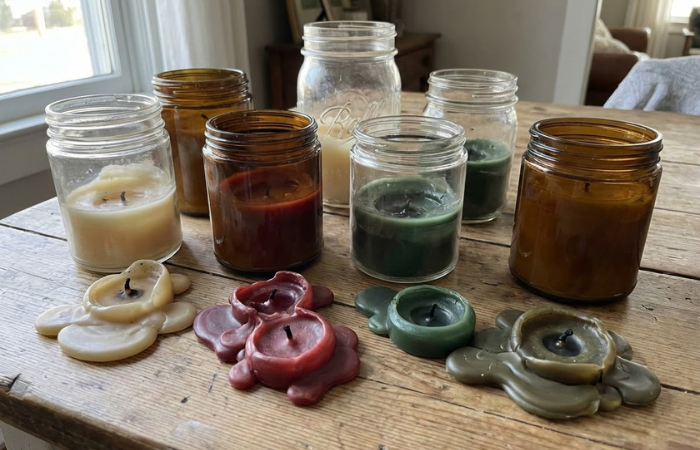
Residual unburnt candles, bits of wax from jars or leftover moulds don't have to end up in the bin. On the contrary - you can easily make a new candle from them, without complicated tools. This process is ideal for anyone who wants to create sustainably, use every last bit of material and try their hand at home candle making.

What leftover wax is suitable

You can use the remains of common candles - paraffin, soy and beeswax. It is ideal to sort wax by type, as each wax has different properties and a different melting point. If you use only one type, the candle will burn more evenly and predictably.

Mixing different waxes together is possible, but you need to know what to expect from the result. For example, paraffin wax and soy wax can be mixed, and are commonly done in candle making, but the resulting mixture may have a different hardness, different surface appearance, and different burning behavior. A candle may soften faster or have a shorter burning time. If you decide to combine waxes, it is recommended to try a smaller amount first and test the result. For beginners, however, it is easier to stick to one type of wax.

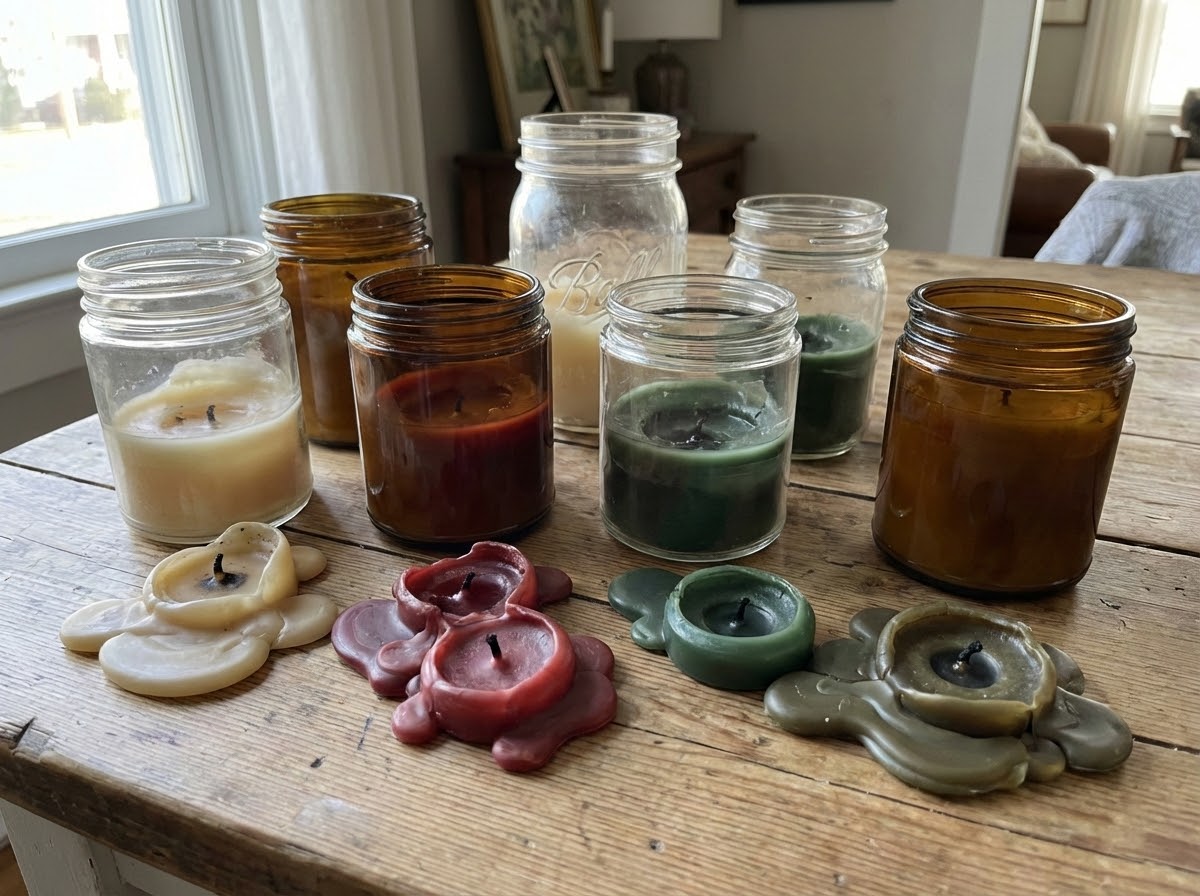
Leftover candles

What if you're missing something to make candles

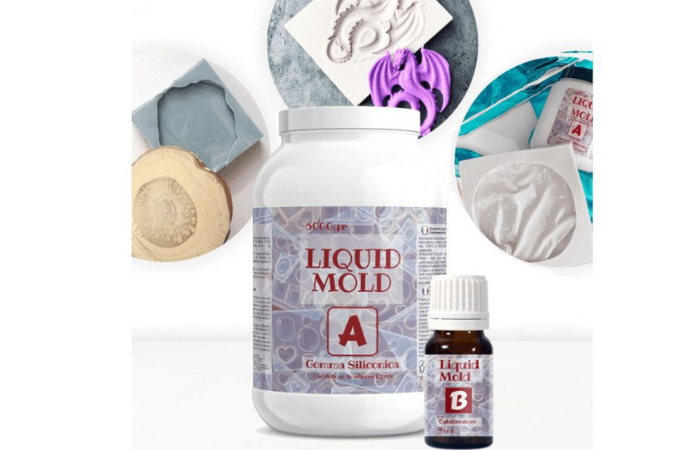
If you're missing wicks, dyes, fragrances or need to replenish wax, you'll find everything you need in this category. You can also get silicone molds, which can be poured with smaller leftovers to create original candle shapes. This allows you to make multiple candles at once or experiment with combinations of colours and scents.

How to remove the old wick and clean the jar

If you are using old candle jars, you need to clean them first. The easiest way is to heat the jar briefly - either in a water bath or by pouring hot water over it. The wax will soften, or loosen, and you can easily remove it. Simply remove the rest of the wick and the metal plate with a knife or spoon. Just wash the jar with warm water and detergent and let it dry well.

If you have any speckles or wicks left in the wax that's fine, melt them all at once and then fish them out of the liquid wax with a spoon.

Wick preparation

Fix the new wick into a clean jar or mould. It is easiest to use a wick with a metal plate that sticks to the bottom. Center the wick so it stays centered while the wax is setting.

Safe wax melting

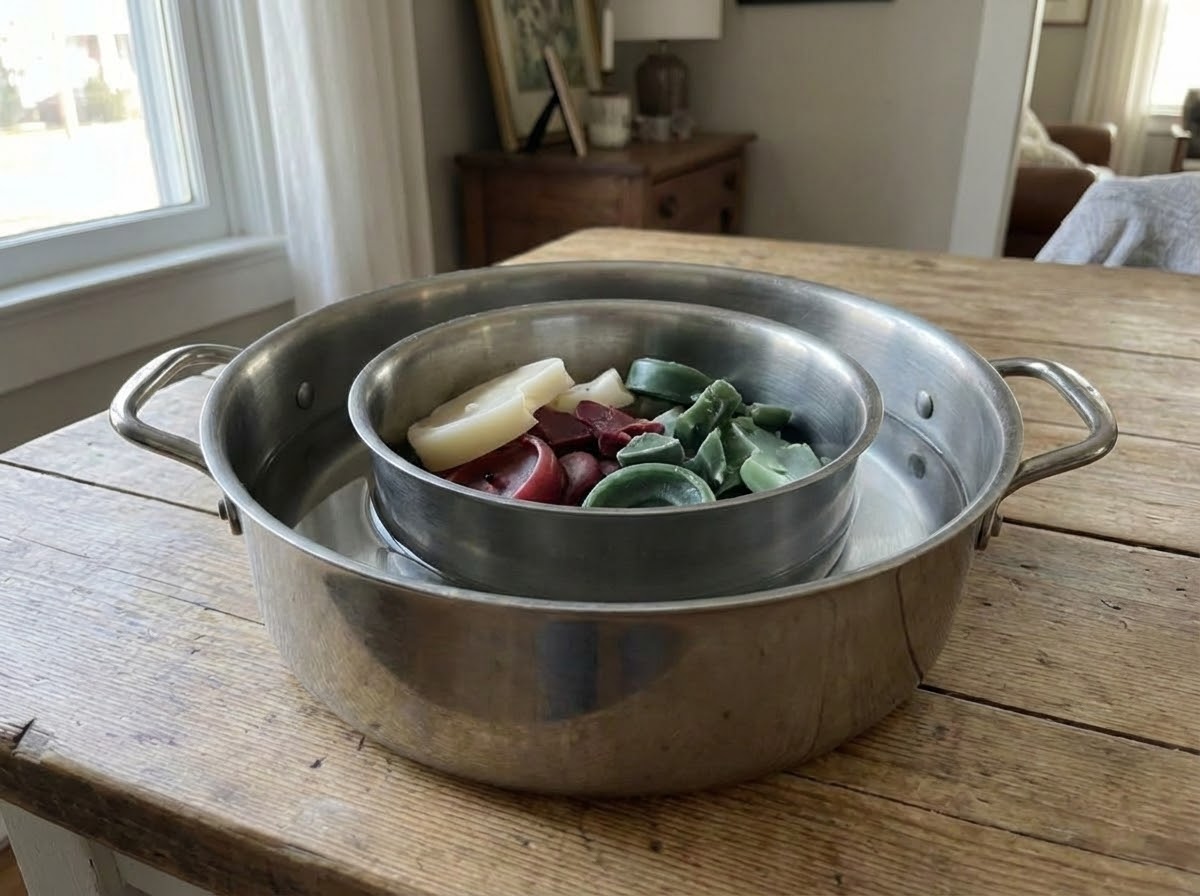
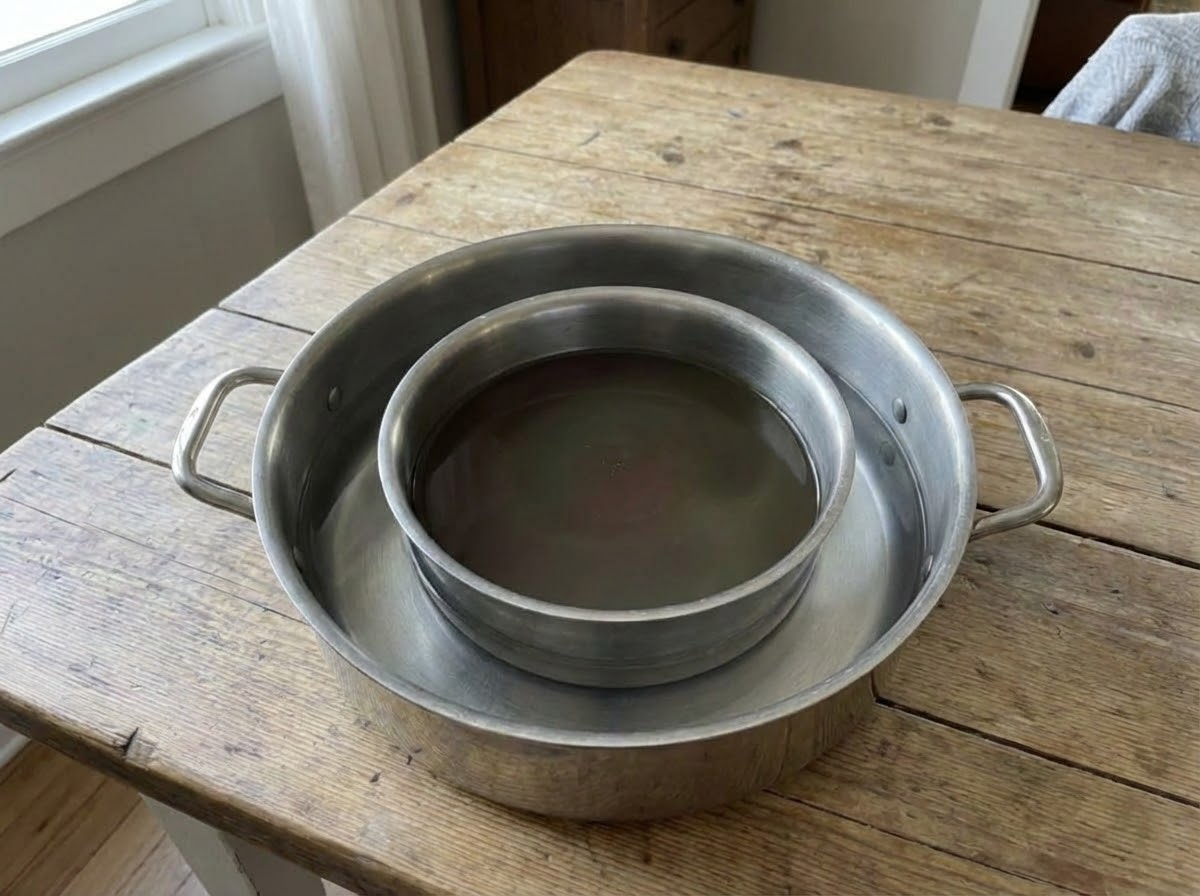
Always melt wax in a water bath, never directly on the stove. A direct heat source can cause the wax to overheat and, in extreme cases, catch fire. Put water in a larger pot, wax in a smaller heatproof container and heat everything slowly. The wax melts gradually and there is no need to boil it rapidly or overheat it. Once it is completely liquid, you can stir it gently.

Leftover candles in a water bath


After melting various waxes, the resulting color is usually not very pretty to look at. Add a little paint designed specifically for candle making and you will create candles that are not only functional, but pretty as well.

If you want to scent the candle, add a small amount of a suitable fragrance ingredient when the wax is melted but not too hot. Too high a temperature can unnecessarily degrade the fragrance.


Melted wax

Applying wax

Pour the melted wax. Pour slowly and steadily to prevent bubbles from entering the candle.

Let the candle harden at room temperature. When fully set, shorten the wick to about half an inch above the surface of the wax. We recommend burning the candle for the first time in 24 hours at the earliest.

Zero-waste Tips and Sustainable Creating

Making a candle from leftover wax is a great example of upcycling. Instead of throwing away leftover candles, you're giving them a new life. You can use old jars, ceramic cups or sturdy metal bowls as containers. If you have a small amount of wax left over, it can also be used to make scented waxes for your aromatherapy waxes.

This method of production is not only eco-friendly, but also practical - homemade candles are suitable as decorations or personal gifts, while minimising household waste.

Why make a candle from scraps

Making a candle from leftover wax is simple, safe and sustainable. Just follow the basic rules when melting wax, work with clean containers and ideally don't mix too many different types of wax without testing first. The result is an original candle that makes sense both creatively and environmentally.

Common candle making problems – part 5: Can’t smell the candle, mistakes when perfuming

Common candle making problems – part 5: Can’t smell the candle, mistakes when perfuming

Many candle makers experience disappointment when their candle does not smell as they expected when lit. A cold candle may smell great, but once you light it, the scent is weak or completely gone.

This is one of the most common queries in candle making - and it has several logical causes. In this article, we'll look at the most common scenting mistakes and how to fix them so your candles smell exactly the way you want them to.

##MEDAILONEK_EN_001##

Why a candle doesn't smell when it burns

When a candle doesn't smell when it's burning, there may be a problem:

  • the amount of fragrance essence,
  • the way it is added,
  • the choice of scent or combination of wax and wick.

A cold candle can smell intensely, but when burning, the situation is different: the scent must be released from the melted wax layer, a more complex process.

Candle scents

Most common mistakes made when scenting candles

Insufficient amount of fragrance essence

If you use too little fragrance essence, the scent will not be distinctive when burning. The recommended amount varies from wax to wax, but as a guide:

  • 40 drops of fragrance per 100 grams of wax for a delicate scent,
  • some scents may need more, others less.

Too low a concentration is the most common reason why a candle does not smell.

Adding fragrance at the wrong temperature

The wax must not be too hot. This would not only cause the candle to perform poorly but also cause the added fragrance to evaporate.

Scent that does not "activate"

Not all scents work the same. Some do not release well when burning or are too weak. So the problem may also be with the brand of fragrance you choose. Follow the reviews for fragrances and choose those verified by other fragrance makers.

Bad combination of fragrance and wax

Each wax has a different profile - some hold fragrance better, others less so. For example:

  • soy waxes may require a different percentage of fragrance than, say, coconut waxes,
  • some fragrances are not suitable for a given wax.

Correct selection by wax type is key.

Test fragrances before major production

Are you looking to produce a larger quantity of candles? Make one test candle, test it while burning, and adjust the scent addition accordingly. Testing will save you time and materials.

➡️ series on the most common problems in candle making is complete. Check out the full series on our blog.


Common candle making problems – Part 4: Wax separation

Common candle making problems – Part 4: Wax separation

Wax separation from the walls of the container is one of the very common problems in the production of candles in glass, ceramics or other containers. A candle may look fine at first glance, but after it has set or after a few hours, a gap appears between the wax and the vessel wall.

The good news is that in most cases it is not the wax that is at fault, but a combination of temperature, container material and cooling method. Let's look at this in detail. 

##MEDAILONEK_EN_001##

What does separating the wax from the container mean

Wax separation is manifested as a gap between the wax and the wall of the container, most often glass or made of NatuResin and EcoResin. The wax shrinks slightly when cooled and if it cools unevenly, it “pulls” away from the walls.

This phenomenon is often also referred to as wet spots. This is not a safety issue, but a purely aesthetic defect that can detract from the appearance of the candle.


Separated wax from container

Most common causes of wax separation

Natural wax shrinkage

All waxes shrink as they cool - some more, some less. Soy and vegetable waxes are more prone to this phenomenon than paraffin waxes.

If the wax solidifies quickly, it will shrink towards the centre of the container and a gap will form at the walls.

Cold or unheated container

A very common mistake is pouring hot wax into a cold container. The temperature difference causes the wax at the sides to solidify immediately, while the centre cools more slowly - resulting in wax separation.

Candle cooling too quickly

A draught, an open window, a cold work surface or placing a candle on a cold surface all lead to uneven cooling and subsequent separation of the wax from the walls.

High pouring temperature

Wax that is too hot will shrink more as it cools. The greater the temperature difference between the wax and the surroundings, the greater the risk of gaps forming.

Vessel type

Different materials conduct heat differently:

  • glass and ceramics cool quickly,
  • thin-walled vessels react more sensitively than thick glass,
  • metal vessels dissipate heat very quickly.

Even the right wax can separate from the walls just because of the packaging chosen.

How to prevent wax from separating from the walls

  • Preheat the container

Before pouring the wax, we recommend slightly preheating the container (e.g. in a warm room or briefly with hot air). The temperature difference will not be as pronounced and the wax will adhere better to the walls.

  • Pour at the correct temperature

Adhere to the recommended warm-up temperature for your specific type of wax. Wax that is too hot increases the risk of shrinkage and separation.

  • Let the candle cool slowly

Let the candle cool at room temperature without drafts away from cold surfaces. A quiet warm place where the wax solidifies evenly on all sides is ideal.

How to fix wax separation from the container

If gaps have already appeared, there is a simple solution:

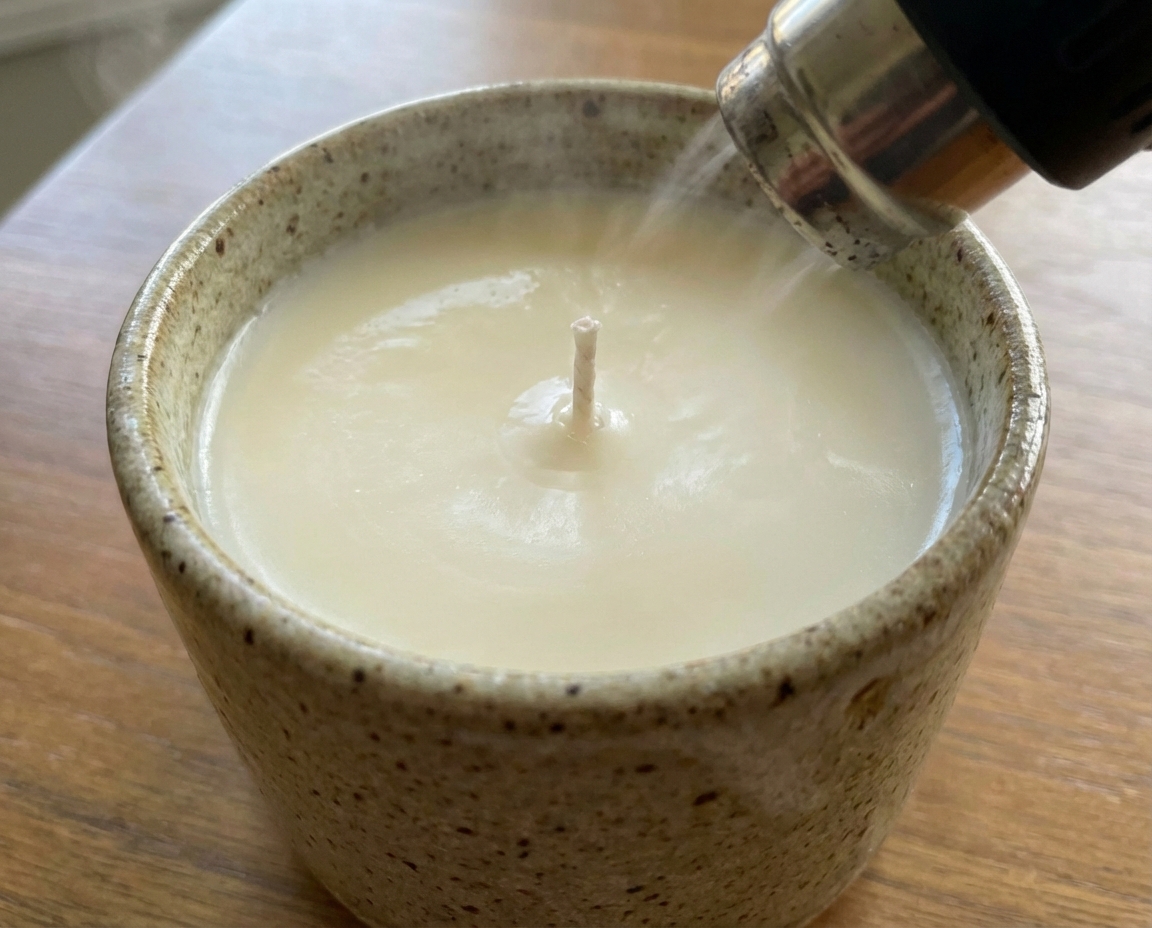
  • Hot air gun - gently heat the surface and edges of the wax to rejoin the sides of the container.
  • Heat gently and evenly so that the wax does not melt too much.

This treatment is ideal especially for candles that are used as decorations or gifts.


Heating wax and filling cracks


➡️ Last part of the series:
In the last part, we'll look at Can't smell candle scent? The most common mistakes in perfuming - one of the most common candle-making disappointments.

Common candle making problems – Part 3: Sunken candles and craters

Common candle making problems – Part 3: Sunken candles and craters

Dropped candles or deep craters in the top layer of wax are one of the most common problems in home candle making. When the wax hardens unevenly after pouring or a pit forms during burning, it can affect not only the appearance of the candle, but also its performance and burning.

Let's take a look at why this happens and how to prevent it.

##MEDAILONEK_EN_001##

What "blown out candle" and wax craters mean

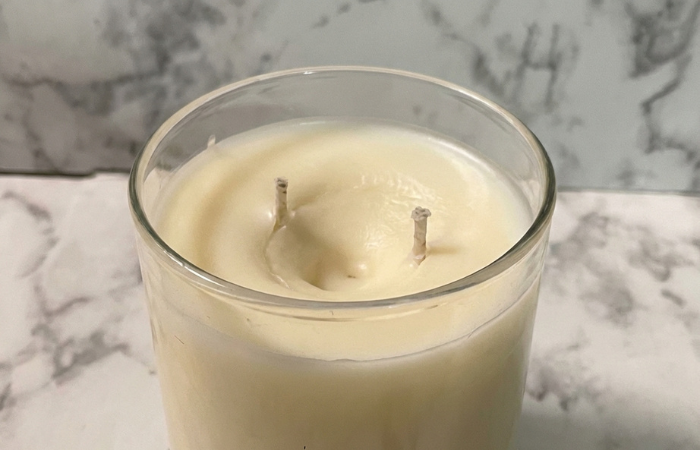
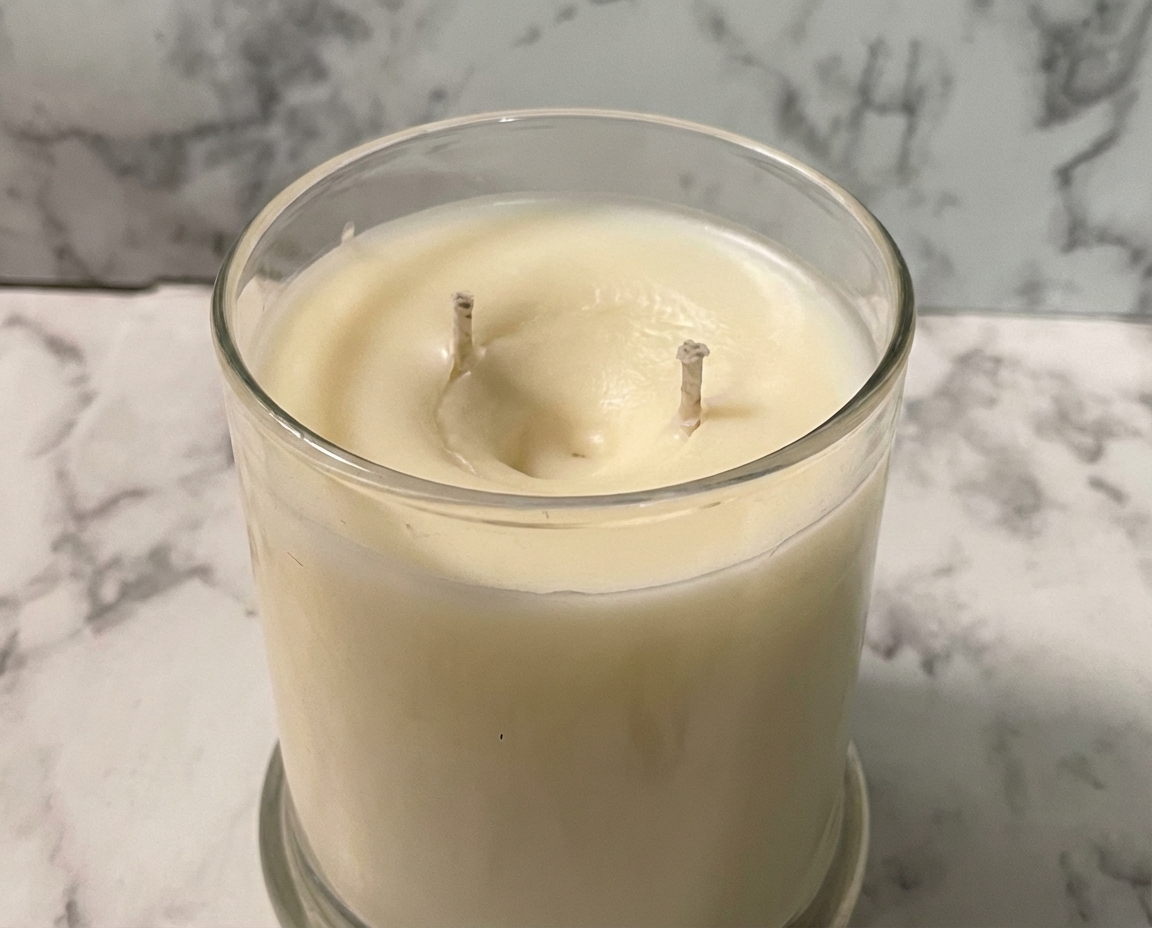
A sunken candle is a situation where the wax, after solidifying or burning, forms a dent or pit (called a sinkhole) in the center of the candle. In practice, this looks like a small lake in the middle of the wax, which shortens the burn time, spoils the appearance, and can sometimes affect the safe burning.

Sinkhole sinkhole candle

Most common causes of sinkhole candles

🕯 Uneven cooling of wax

Wax shrinks as it solidifies, and when it solidifies faster near the edges than near the center, it creates a sunken area. This most commonly occurs when:

  • the wax cools too quickly
  • the period or place is cold or draughty

🕯 Pouring temperature too high

If you pour wax too hot, it may shrink more than it should during cooling, creating depressions.

🕯 Poor pouring technique

Pouring the wax quickly without enough air release can trap bubbles that show up as pits or craters as it cools.

🕯 Wax type and ingredients

Different types of wax cool and shrink differently (e.g., soy wax has a different cooling profile than paraffin wax). The addition of fragrances or colorants can affect the cooling and hardening of the wax.

How to prevent the wax from sinking when hardening

  • Pour wax at the correct temperature.

  • Each wax has a recommended pouring temperature that must be adhered to or you will increase the risk of uneven cooling and sinking.

  • Let the candle cool slowly and evenly.

  • Do not place the candle on a cool or draft affected surface, do not cool in refrigerator or behind a window. Leave it undisturbed at room temperature without shaking. This will give the wax time to harden evenly.

  • Use the "double pour" technique for larger candles.

  • For larger candles, it is often better to let the first small layer of wax set and then pour the rest. This will help minimize the formation of pits and craters.

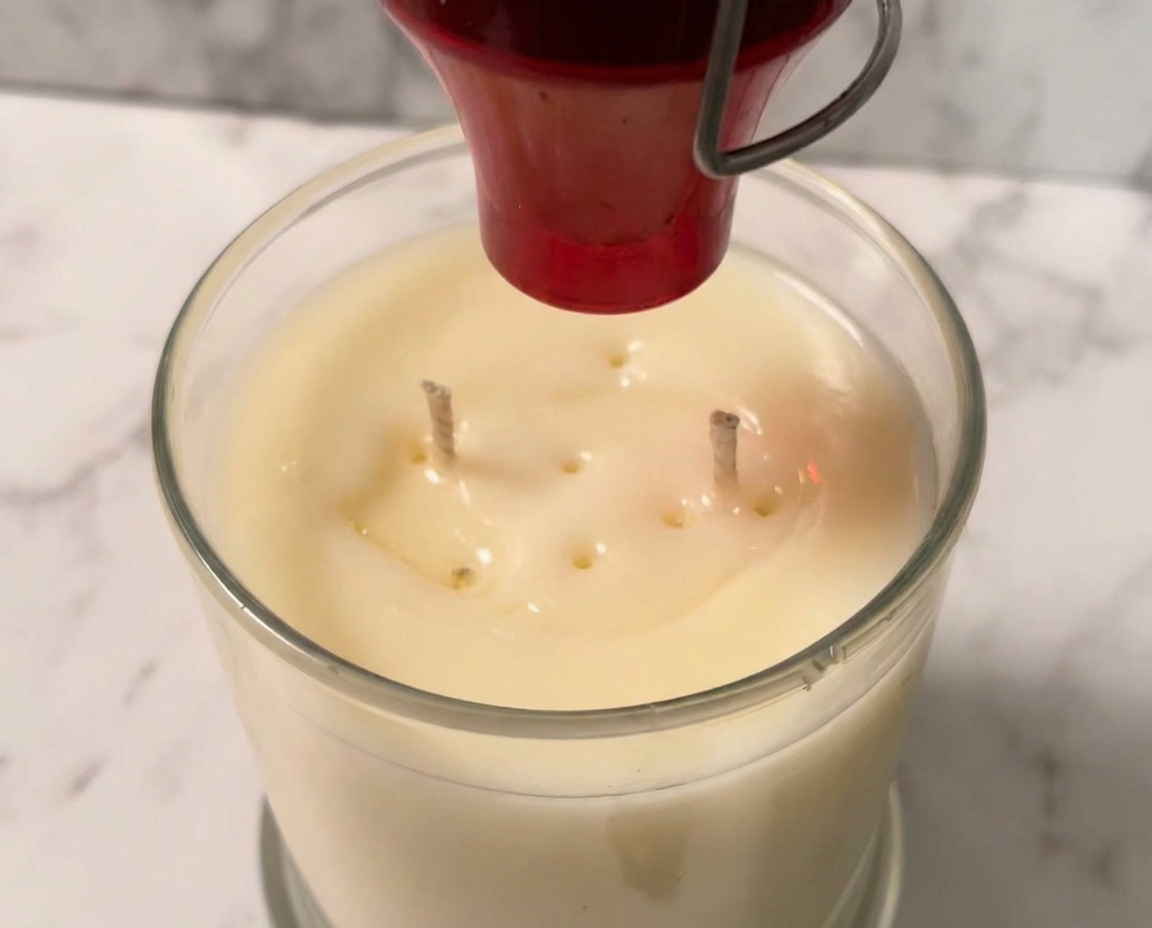
How to fix a blown out candle

Use a skewer to poke holes around the wick and in the center of the candle. Use a heat gun - gently heat the surface of the wax to flatten the dimple.

Repair a sunken candle

➡️ Next part of the series:
In the next article, we'll look at wax separation from vessel walls: why it happens and how to eliminate it.


Common candle making problems – Part 2: Smoking, sputtering and extinguishing

Common candle making problems – Part 2: Smoking, sputtering and extinguishing

Does the candle smoke, sputter or go out by itself? These are common situations encountered by candle makers, whether beginners or advanced. Most of the time, it's nothing complicated - the problem is related to the wick, the burning conditions, or the combination of wax and fragrance.

Let's talk about what this means and how to prevent it.

##MEDAILONEK_EN_001##


Why the candle smokes

You can tell when a candle is smoking by the black smoke, soot on the glass or the smell that is produced when it burns.

The most common causes of candle smoking

  • Too long or thick wick
    The flame is too high or unstable and produces soot.
    💡 Always shorten the wick to about 3-5 mm before lighting
  • Usuitable wick for candle diameter
    A thick wick in a small candle means overheating and smoking.
  • Draft or air movement
    An open window or vent deflects the flame - burning is uneven.

    Smoky candle

Why a candle pops

Cracking is less common than smoking, but it can be really annoying.

The most common causes of candle cracking

  • Wood wick
    Light cracking is normal with wood wicks - it's a typical effect of wood burning
  • Moisture or dirt in the wax
    If water or dirt gets into the wax, it may cause a little sizzling.
  • Too much fragrance essence
    Excessive perfuming can alter the combustion of the wax and cause sizzling. We recommend using approximately 40 drops of fragrance per 100g of wax. Use essences suitable for candle making.

Why the candle goes out

Extinguishing during burning is frustrating, but it is usually a wick or wax setting error.

The most common causes of candle extinguishment

  • Wick too weak or short
    The flame does not have enough fuel and goes out in a deep wax bath.
  • Inappropriate wax and wick combination
    Some waxes require a thicker or different type of wick.

    Dying candle flame

How to prevent smoking, sizzling and extinguishing

✔️ Trim the wick before each lighting - approx 3-5mm
✔️ Choose the correct wick for the candle diameter and wax type
✔️ Follow the recommended amount of fragrance - do not overload the wax
✔️ Leave the candle burning in a draft-free place

➡️  Continuing the series:
In the next article, we'll look at dropped candle and craters after wax hardening.

Common candle making problems – Part 1: Candle tunneling

Common candle making problems – Part 1: Candle tunneling

Tunnelling is one of the most common problems in the manufacture and use of candles. The candle burns only in the middle, leaving hard wax on the sides and creating a deep "tunnel". Not only does this not look nice, but it unnecessarily shortens the life of the candle and wastes wax.

Good news? Tunneling is easily prevented - and often repaired - in most cases. Let's talk about why it occurs and what to do about it.

##MEDAILONEK_EN_001##

What is candle tunneling

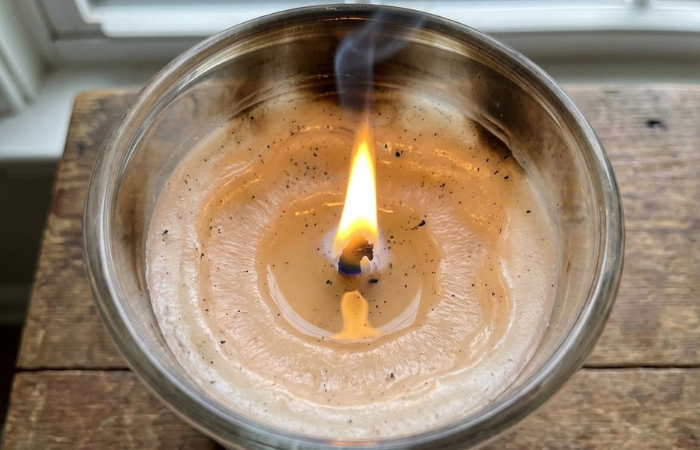
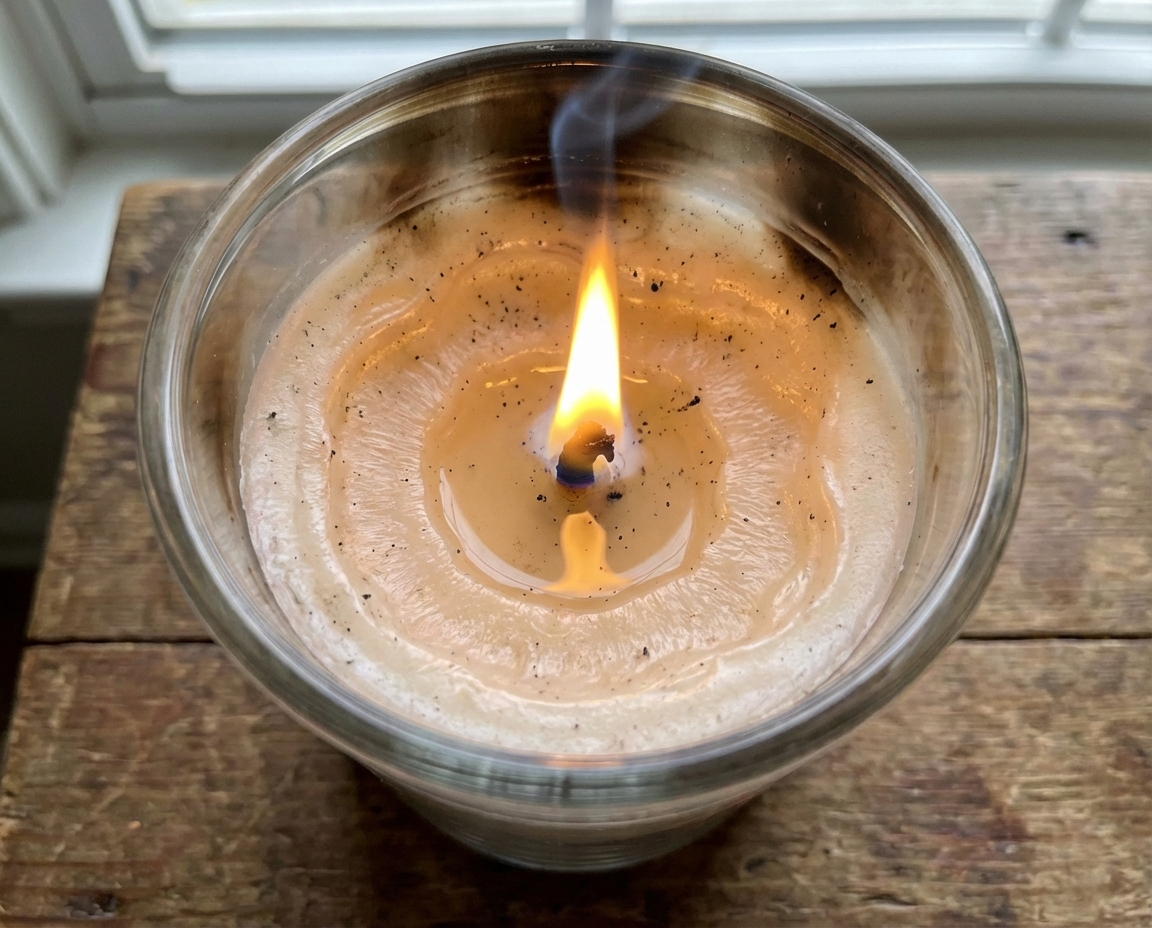
Tunneling means that the entire surface of the candle does not melt when it burns, but only the center around the wick. The cold, unwoven wax remains on the sides.

A properly burning candle should create an even bath of melted wax up the sides of the container.


Tunneling Candle

Why a candle tunnels

Tunneling has several typical causes. Often multiple factors combine at once.

  • Wick too weak

Most common reason for tunneling. The wick does not have enough power and the flame does not generate enough heat, because of this the wax only melts in the middle.

  • Poorly chosen wick to wax type

Each wax burns differently. Soy and canola waxes usually need a thicker wick or multiple wicks, paraffin wax burns more easily. If you use the same wick for different waxes, the result can vary greatly.

  • Too short a first burn

The first lighting of a candle is absolutely crucial. If you blow out the candle before the wax has melted all over the surface, the candle will "remember" the narrow tunnel and the tunnel will only get deeper the next time it burns.

The rule of thumb is: 1 hour of burning per 1 cm of candle diameter. Therefore, after the first lighting you have to let the candle burn longer.

  • Drafts and cold environments

An open window, a draft, or a cold room affect the proper burning of a candle. The flame deflects or burns low and the heat is not distributed evenly.

How to prevent candle tunnelling

  • Always choose the correct wick for the diameter of the candle, take into account the type of wax and consider multiple wicks for wider candles. If you are hesitating between two sizes, a slightly thicker wick is often better.

  • Give the candle plenty of time when it first burns. Let the candle burn until the wax melts to the walls. This will set the proper foundation for all subsequent ignitions.

    Proper candle burn

  • Trim the wick before lighting. The ideal length is 3-5 mm. Long wick = unstable flame.

    Extinguished candle with correct wick length

  • Let the candle burn without a draft. Stable flame = even wax melting

How to fix a tunneling candle

Even if the candle is already tunneling, it's not lost yet.

💡 The foil method

  1. Wrap the top of the candle with foil
  2. Leave a hole above the wick
  3. Light the candle and let it burn

The heat will bounce back and the wax will gradually melt down to the edges.

Tunneling Candle Repair

💡 Using a Heat Gun

  • Gently heat the wax surface
  • level the top layer

Ideal mainly for candles in glass containers.

➡️ Continuing the series:

In the next installment, we'll take a look at why a candle smokes, sputters or goes out and how to fix these problems.

Listing controls

8 items total