
Common candle making problems – Part 3: Sunken candles and craters
Dropped candles or deep craters in the top layer of wax are one of the most common problems in home candle making. When the wax hardens unevenly after pouring or a pit forms during burning, it can affect not only the appearance of the candle, but also its performance and burning.
Let's take a look at why this happens and how to prevent it.
##MEDAILONEK_EN_001##
What "blown out candle" and wax craters mean
A sunken candle is a situation where the wax, after solidifying or burning, forms a dent or pit (called a sinkhole) in the center of the candle. In practice, this looks like a small lake in the middle of the wax, which shortens the burn time, spoils the appearance, and can sometimes affect the safe burning.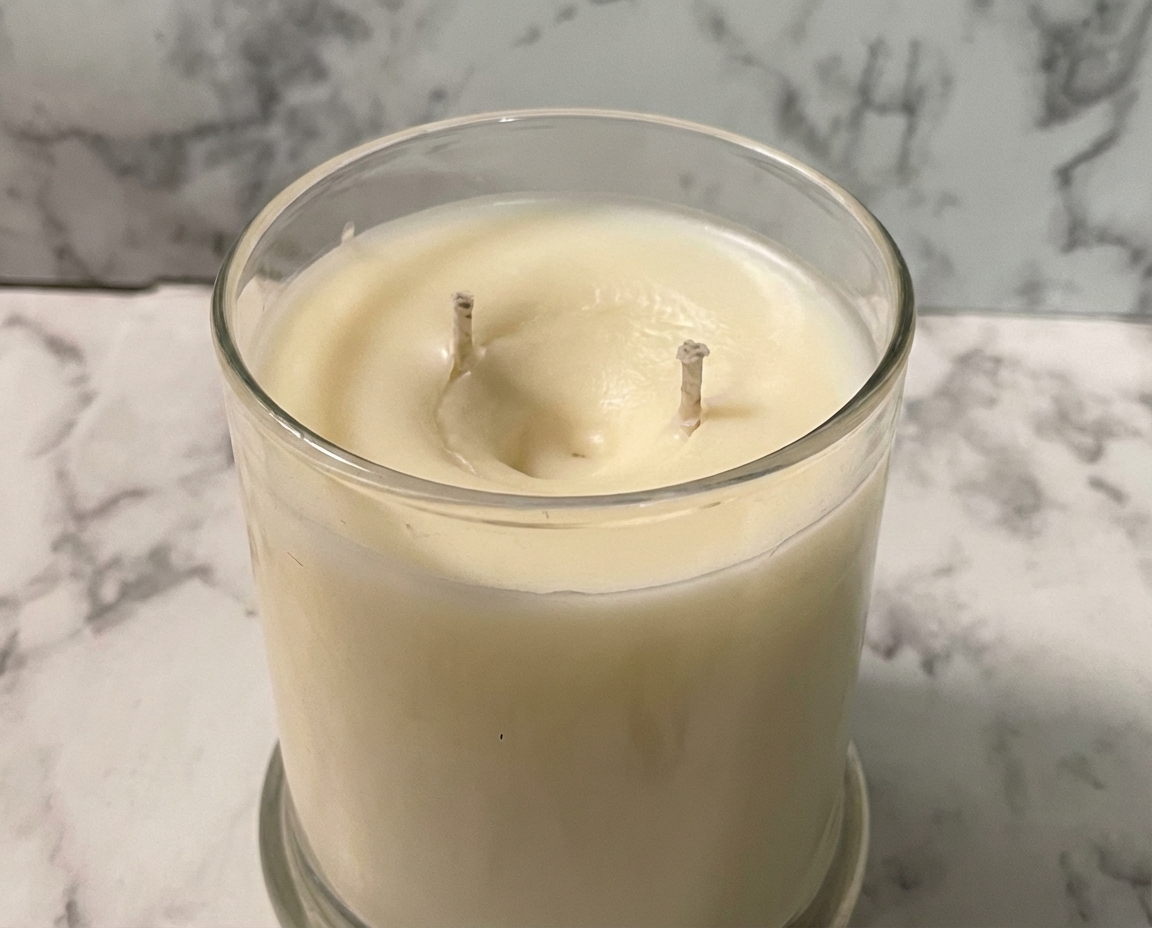
Most common causes of sinkhole candles
🕯 Uneven cooling of wax
Wax shrinks as it solidifies, and when it solidifies faster near the edges than near the center, it creates a sunken area. This most commonly occurs when:
- the wax cools too quickly
- the period or place is cold or draughty
🕯 Pouring temperature too high
If you pour wax too hot, it may shrink more than it should during cooling, creating depressions.
🕯 Poor pouring technique
Pouring the wax quickly without enough air release can trap bubbles that show up as pits or craters as it cools.
🕯 Wax type and ingredients
Different types of wax cool and shrink differently (e.g., soy wax has a different cooling profile than paraffin wax). The addition of fragrances or colorants can affect the cooling and hardening of the wax.
How to prevent the wax from sinking when hardening
- Pour wax at the correct temperature.
- Each wax has a recommended pouring temperature that must be adhered to or you will increase the risk of uneven cooling and sinking.
- Let the candle cool slowly and evenly.
- Do not place the candle on a cool or draft affected surface, do not cool in refrigerator or behind a window. Leave it undisturbed at room temperature without shaking. This will give the wax time to harden evenly.
- Use the "double pour" technique for larger candles.
- For larger candles, it is often better to let the first small layer of wax set and then pour the rest. This will help minimize the formation of pits and craters.
How to fix a blown out candle
Use a skewer to poke holes around the wick and in the center of the candle. Use a heat gun - gently heat the surface of the wax to flatten the dimple.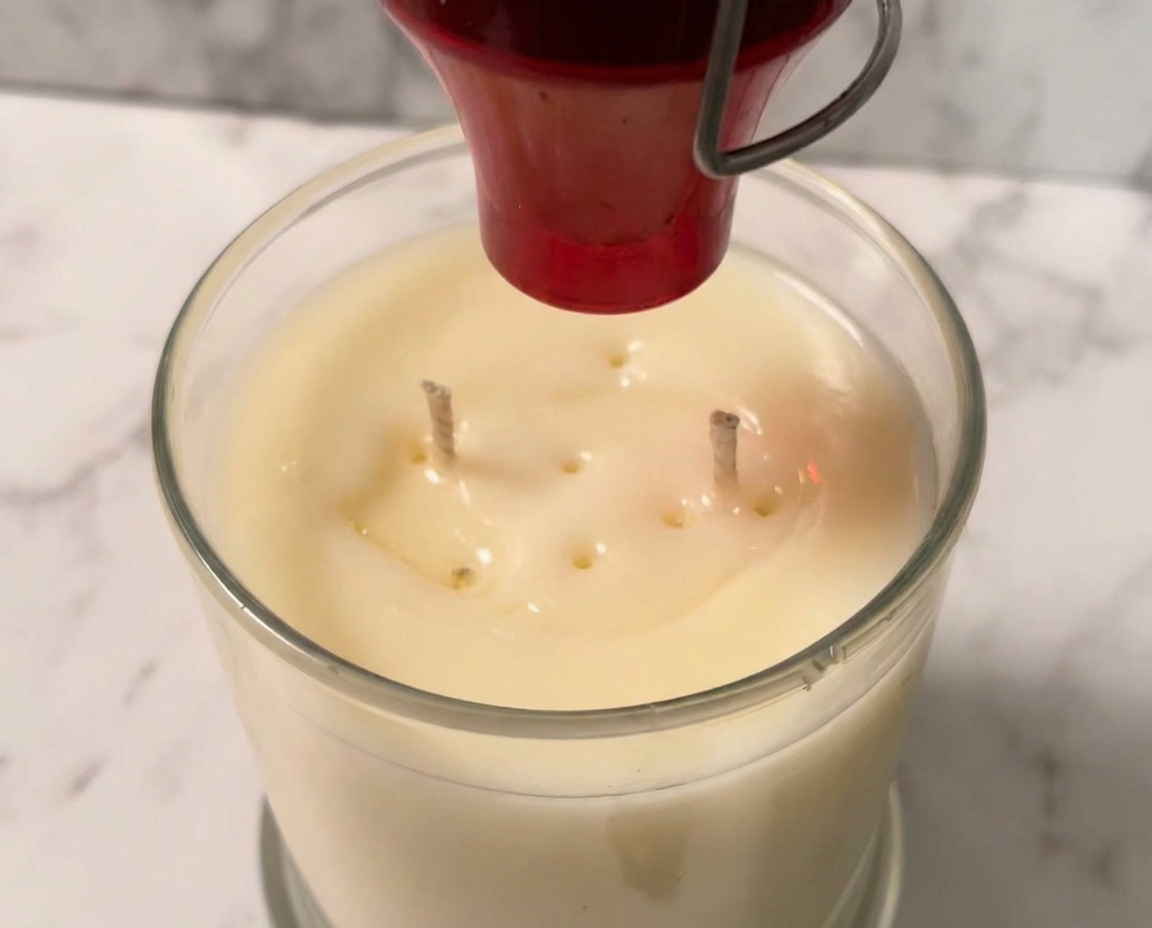
➡️ Next part of the series:
In the next article, we'll look at wax separation from vessel walls: why it happens and how to eliminate it.