
Common candle making problems – Part 4: Wax separation
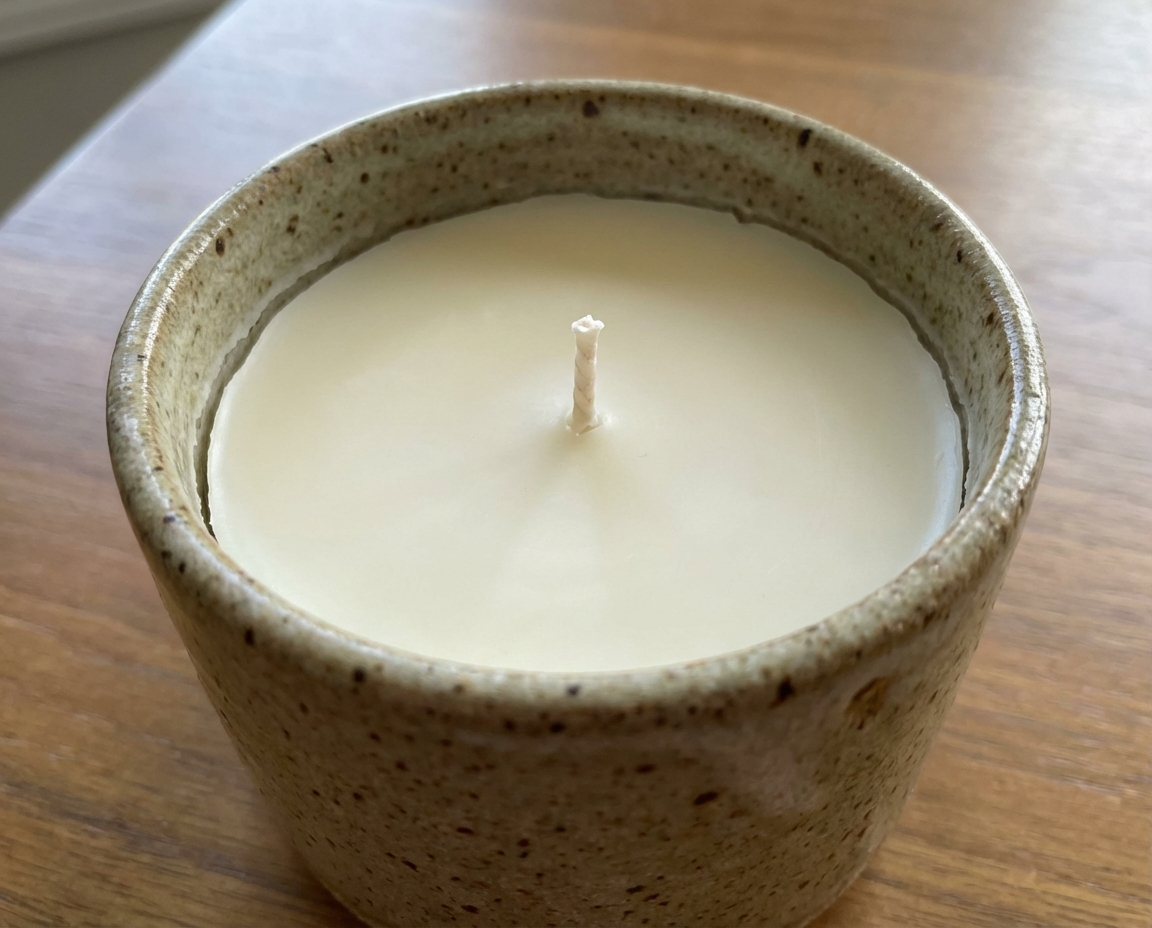
Wax separation from the walls of the container is one of the very common problems in the production of candles in glass, ceramics or other containers. A candle may look fine at first glance, but after it has set or after a few hours, a gap appears between the wax and the vessel wall.
The good news is that in most cases it is not the wax that is at fault, but a combination of temperature, container material and cooling method. Let's look at this in detail.
##MEDAILONEK_EN_001##
What does separating the wax from the container mean
Wax separation is manifested as a gap between the wax and the wall of the container, most often glass or made of NatuResin and EcoResin. The wax shrinks slightly when cooled and if it cools unevenly, it “pulls” away from the walls.
This phenomenon is often also referred to as wet spots. This is not a safety issue, but a purely aesthetic defect that can detract from the appearance of the candle.
Most common causes of wax separation
Natural wax shrinkage
All waxes shrink as they cool - some more, some less. Soy and vegetable waxes are more prone to this phenomenon than paraffin waxes.
If the wax solidifies quickly, it will shrink towards the centre of the container and a gap will form at the walls.
Cold or unheated container
A very common mistake is pouring hot wax into a cold container. The temperature difference causes the wax at the sides to solidify immediately, while the centre cools more slowly - resulting in wax separation.
Candle cooling too quickly
A draught, an open window, a cold work surface or placing a candle on a cold surface all lead to uneven cooling and subsequent separation of the wax from the walls.
High pouring temperature
Wax that is too hot will shrink more as it cools. The greater the temperature difference between the wax and the surroundings, the greater the risk of gaps forming.
Vessel type
Different materials conduct heat differently:
- glass and ceramics cool quickly,
- thin-walled vessels react more sensitively than thick glass,
- metal vessels dissipate heat very quickly.
Even the right wax can separate from the walls just because of the packaging chosen.
How to prevent wax from separating from the walls
- Preheat the container
Before pouring the wax, we recommend slightly preheating the container (e.g. in a warm room or briefly with hot air). The temperature difference will not be as pronounced and the wax will adhere better to the walls.
- Pour at the correct temperature
Adhere to the recommended warm-up temperature for your specific type of wax. Wax that is too hot increases the risk of shrinkage and separation.
- Let the candle cool slowly
Let the candle cool at room temperature without drafts away from cold surfaces. A quiet warm place where the wax solidifies evenly on all sides is ideal.
How to fix wax separation from the container
If gaps have already appeared, there is a simple solution:
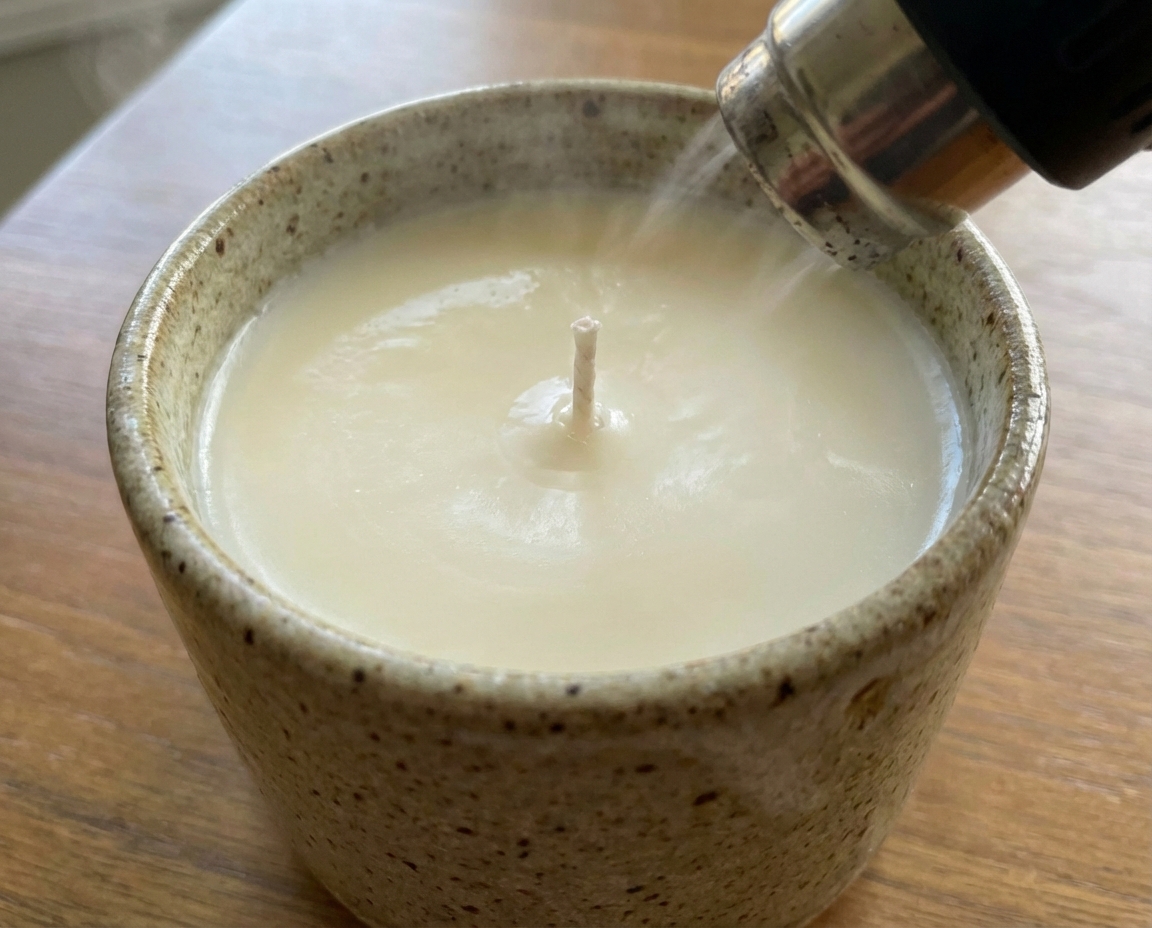
- Hot air gun - gently heat the surface and edges of the wax to rejoin the sides of the container.
- Heat gently and evenly so that the wax does not melt too much.
This treatment is ideal especially for candles that are used as decorations or gifts.
➡️ Last part of the series:
In the last part, we'll look at Can't smell candle scent? The most common mistakes in perfuming - one of the most common candle-making disappointments.