
How to make your own candle container and cast the wax into it correctly
Manufacturing candle containers from powder casting materials such as NatuResin and EcoResin is popular not only among candle makers, but also among creatives who want to be in full control of the final product. These materials are cast in silicone molds, allowing you to create containers in the exact shape, size and style you need.
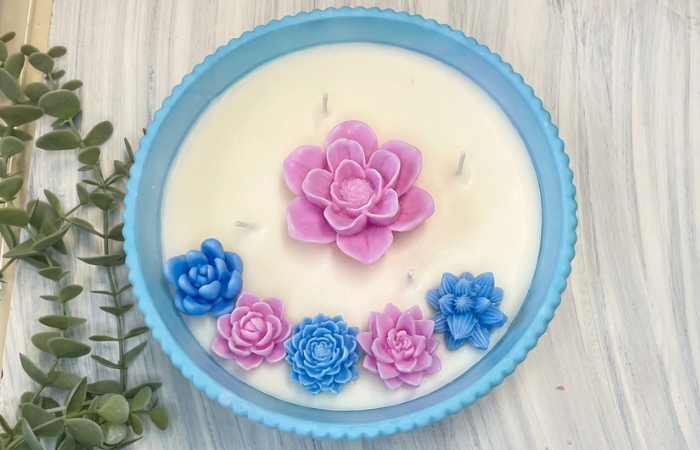
A great advantage is also the ability to colour the mass to your own liking - either subtly tinted or bold design pieces. Each jar can thus be original and perfectly match the scent and style of the candle.
##MEDAILONEK_EN_001##
How to make a candle jar
-
Preparing the silicone mould and mixing the mass
The mould must be clean, dry and free of any residue from previous casting. Mix NatuResin or EcoResin powder mix with water according to the recommended ratio. Stir slowly to avoid getting too much air into the mixture. You can add pigments suitable for these mixtures to the mixed mass, mix thoroughly. -
Casting and Curing
Pour the mixture into the silicone mould and tap it lightly to release air bubbles. After curing (curing time depending on the type of compound), carefully remove the container from the mould. It is recommended to let the finished container dry and cure for at least 24-48 hours to remove excess moisture.
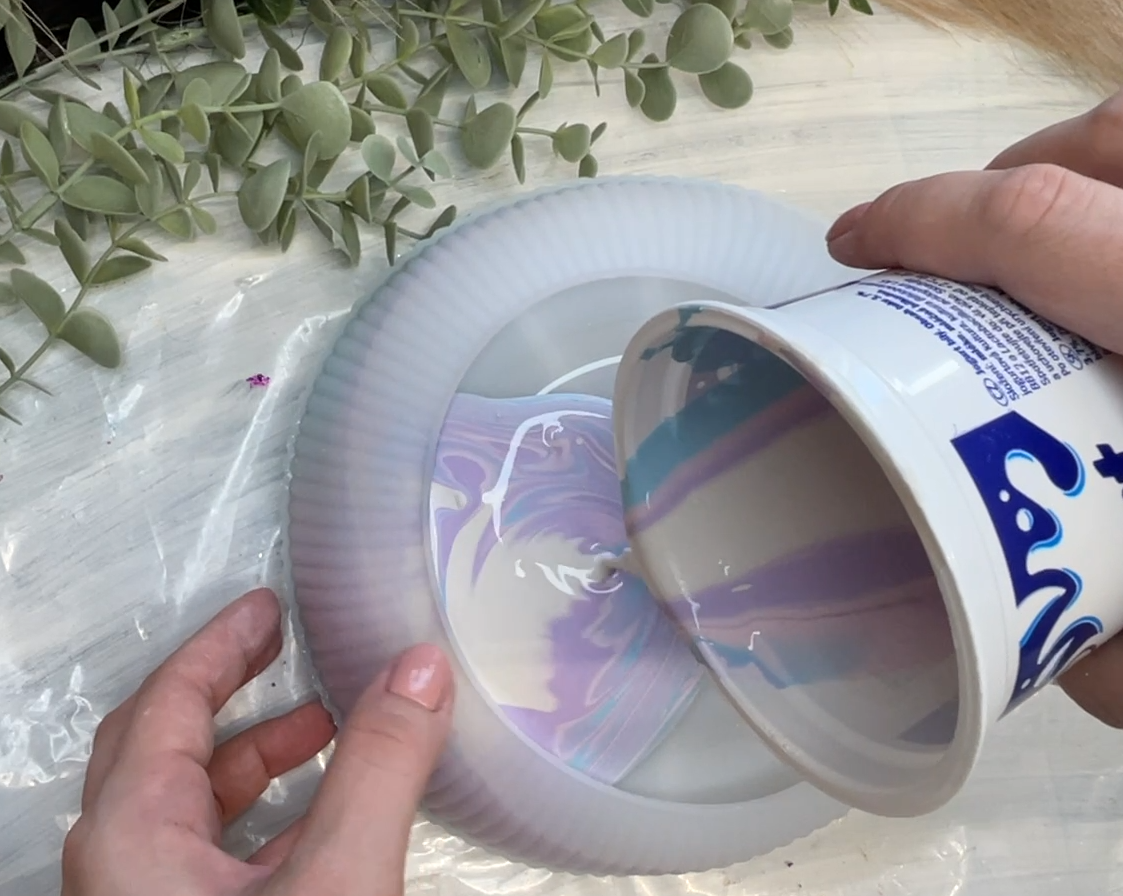
Making a Candle Jar - click on the image or here for a video tutorial
Tested procedure for casting candles in NatuResin and EcoResin containers
In order for the candle to burn well in the container, not crack and not damage the container, it is important to follow the correct procedure:
- Thoroughly dry the container
The container must be completely dry. If moisture is left in the material, cracking or spots may occur on contact with the hot wax. Ideally, the container should be left to dry for at least 48 hours, longer for thicker walls.
- How to treat the inside of the container before wax casting
In our experience, there is no need to treat the inside of the container, we have not noticed any wax spots or anything like that. However, if you are a fan of treating before casting, or if you work with candle making on a professional level, use a sealer or protective varnish suitable for candles. It is also possible to fill the inside of the container with wax (thin layer of melted wax, pour out the rest of the wax).
- Fixing the wick
Fix the wick to the bottom of the container using an adhesive pad under the wick, or a small amount of melted wax. The wick must be centered so that the candle burns evenly. You can find everything you need to make candles here.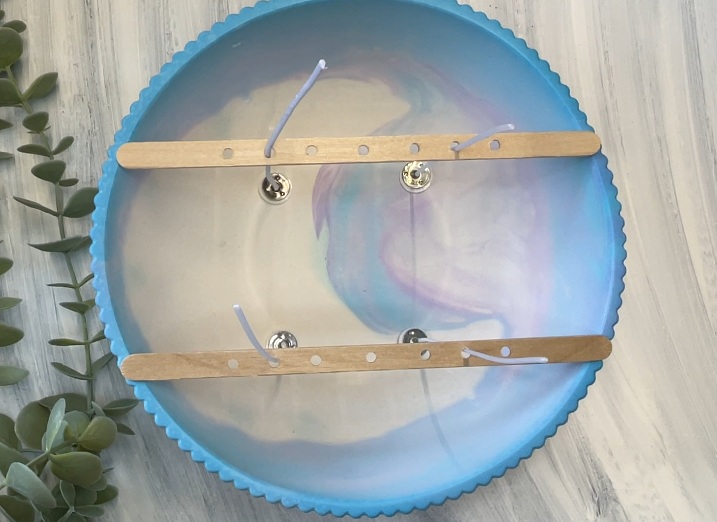
💡 How to choose the right wick according to the size of the container
In order for a candle to burn well, the wick must be able to melt the wax almost to the sides of the container. In general, one wick is suitable for smaller diameters, but for larger containers it is better to use more wicks.
Cotton (prepared, waxed) wicks: put 1 wick up to a diameter of about 8 cm, 2 wicks from a diameter of 9-10 cm. If hard wax remains on the sides of the candle or the flame is weak, this is a sign to choose more wicks the next time you make it.
Wood wicks: up to approx. 7 cm diameter 1 wood wick, from 8-9 cm diameter 2 wood wicks or wider/double wick.
Always place the wicks evenly and symmetrically. We recommend testing each combination of container, wax and wick as different waxes burn differently.
- Correct wax temperature
Wax does not benefit from extremely high temperatures. The recommended casting temperature is usually around 55-65 °C (depending on the type of wax). Wax that is too hot can cause micro-cracks or maps on the surface of the container.
- Adding fragrance and color
When the wax is liquid add fragrance (about 40 drops per 100 grams of wax is recommended) and color, mix well.
- Is it necessary to heat the container before pouring the wax?
For NatuResin and EcoResin containers, a slight heating before wax casting is advisable, especially for thicker walls or in colder environments. The wax does not melt as quickly at the walls, the risk of maps, spots and micro-cracks is reduced, and the candle solidifies more evenly and adheres better to the vessel.
How to heat the container before casting the candle?
Melt a lukewarm container, not a hot one. Heat ideally with a hairdryer, heat gun on low or briefly in a warm place. The container should only be warm to the touch
When to skip heating? For thin-walled containers or when casting wax at the correct temperature and in a warm room.
If there are spots or the wax is "bouncing" off the walls, heating is a simple step that usually solves the problem.
- Topping off the candle
Fix the wicks with wick holders and pour the wax slowly. After pouring, allow the candle to set at room temperature, without drafts, do not put it in cold places to set.
- Final Finish
After the wick has completely set, trim the wick to about 0.5-1 cm. If you wish, you can heat the surface of the cast candle and decorate it with wax decorations. We show how to do this in the video tutorial mentioned above. We recommend letting the candle sit for 24 hours before lighting it or offering it for sale.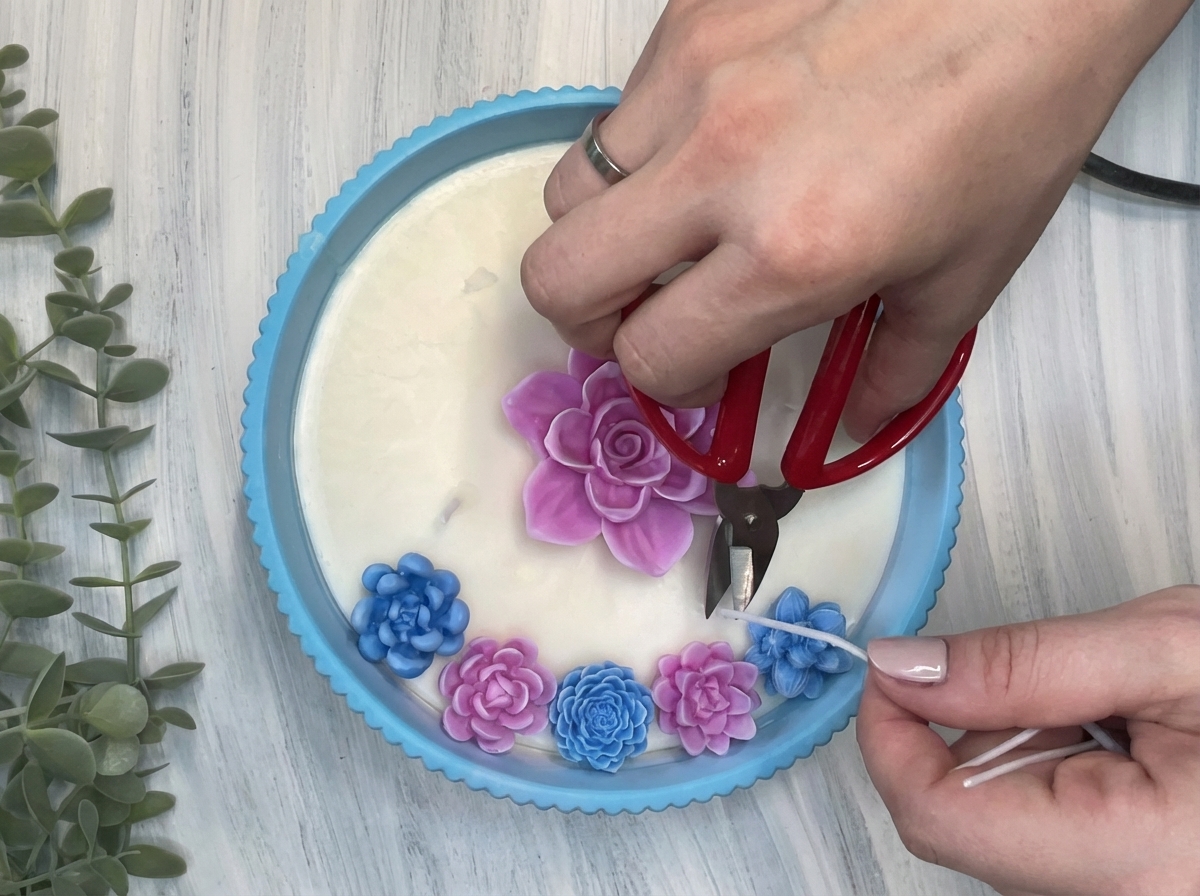
- First Candle Burning
The first lighting of a candle is crucial to its continued proper burning. Allow the candle to burn long enough for the wax to melt all the way down to the sides of the container. This will prevent tunneling and uneven burning.
Recommended first burn time is approximately 1 hour for every 2-3 cm of candle diameter, but no more than 3-4 hours at a time.
Shorten the wick to approximately 0.5-1 cm before each subsequent lighting. A properly done first burn significantly extends the life of the candle and ensures an even and safe burn.
Instructions:
Whether you are just starting out or have your own brand of candles, you can find all the materials - powders, silicone moulds, pigments, waxes and wicks - in our e-shop.